Fighter Jet Comparison ToolCompare 25+ military fighter aircraft head to head!

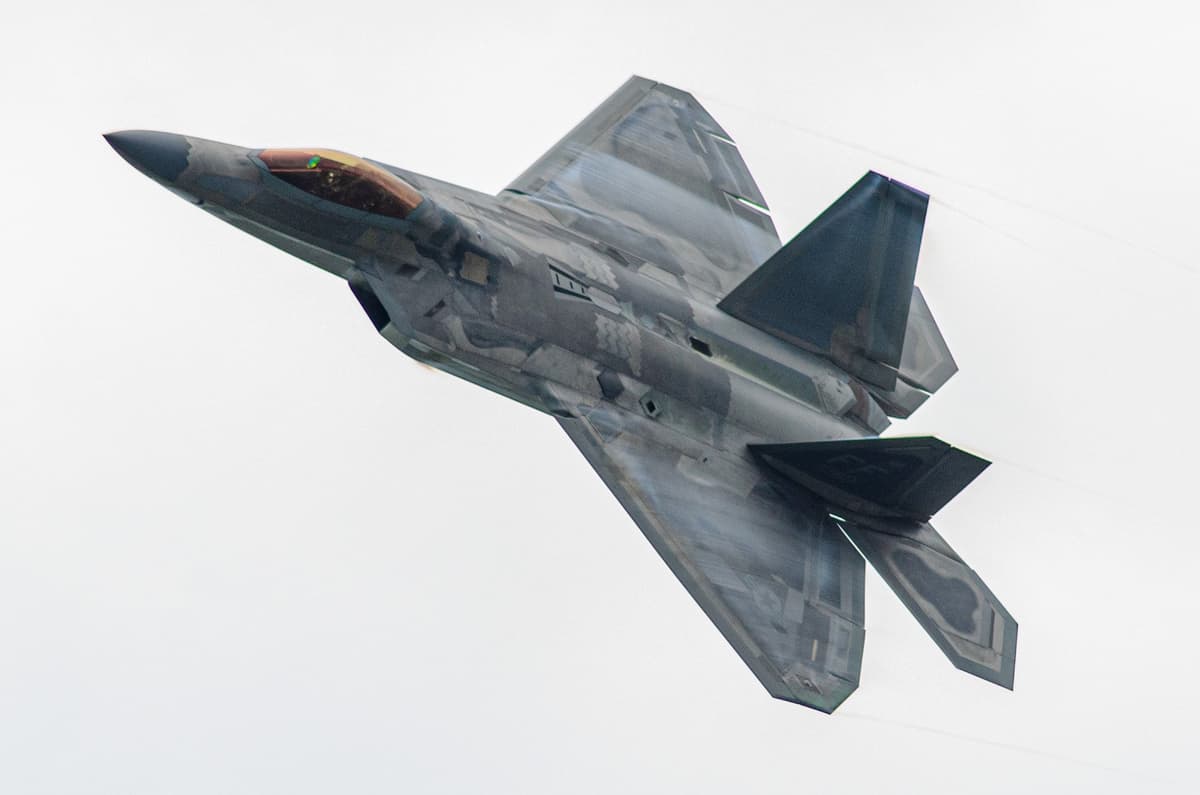
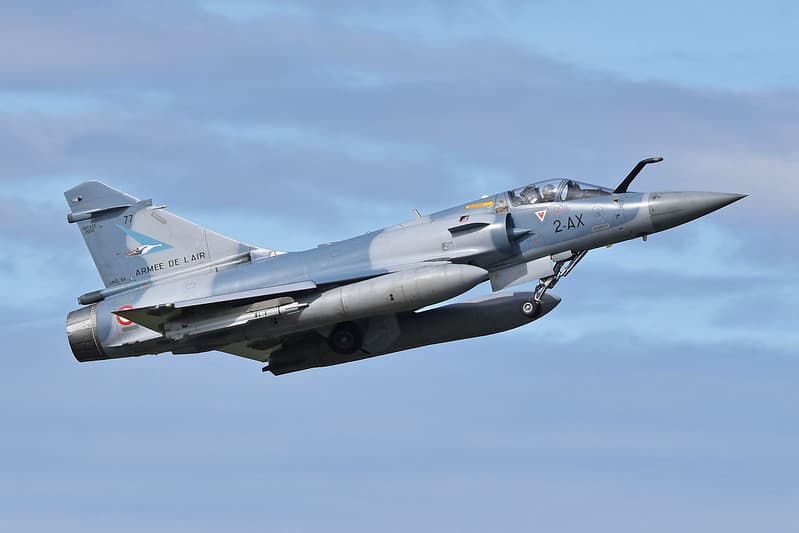
F-22 Raptor vs. Dassault Mirage 2000

vs.
Compare

F-22

vs.

Mirage 2000

Role
Stealth air superiority fighterMulitrole fighter
Generation
5th generation4th generation
National Origin
United StatesFrance
Manufacturer
Lockheed MartinDassault
Price (USD)
$150 Million$30 Million
Primary Users
US Air ForceFrench Air and Space Force
First Flight
19971978
Last Production Year
20112007
# Units Built
195601
Status
In ServiceIn Service
Seats
11
Length
18 m62 ft
14 m47 ft
Wingspan
13 m44 ft
9 m30 ft
Wing Area
78 m²840 ft²
41 m²441 ft²
Height
5 m16 ft
5 m17 ft
Empty Weight
19,659 kg43,340 lbs
7,498 kg16,530 lbs
Gross Weight
29,411 kg64,840 lbs
13,798 kg30,420 lbs
MTOW
37,875 kg83,500 lbs
17,463 kg38,500 lbs
Fuel Capacity
8,165 kg18,000 lbs
2,812 kg6,200 lbs
Number of Engines
21
Engine Type
TurbofanTurbofan
Engine Manufacturer
Pratt & WhitneySnecma
Engine Model
F119-PW-100M53-P2
Dry Thrust
116 kN26,000 lbs
64 kN14,500 lbs
Thrust w/ Afterburner
156 kN35,000 lbf
95 kN21,400 lbf
Max Thrust
312 kN70,000 lbf
95 kN21,400 lbf
Max Speed (Mach)
Mach 2.25Mach 2.20
Top Speed
2,414 km/h1,500 mph
2,337 km/h1,452 mph
Range
2,963 km1,600 nm
1,556 km840 nm
Rate of Climb
315 m/s62,000 ft/min
285 m/s56,100 ft/min
Ceiling
19,812 m65,000 ft
18,288 m60,000 ft
G Limit
9 g9 g

What Are the Differences Between the F-22 Raptor and Dassault Mirage 2000

F-22 Raptor vs Dassault Mirage 2000 Size Comparison

  • At 18.90 meters, the F-22 Raptor is 4.50 meters longer than the Dassault Mirage 2000.
  • With a wingspan of 13.60 meters, the F-22 Raptor is 4.50 meters wider from wingtip to wingtip.
  • The wing area of the Dassault Mirage 2000 is 0.10 meters bigger than that of the F-22 Raptor’s 5.10 meters.

F-22 Raptor vs Dassault Mirage 2000 Price

  • The F-22 Raptor is more expensive than the Dassault Mirage 2000, with a unit cost of approximately 150 million compared to the Dassault Mirage 2000’s unit cost of approximately 30 million.

F-22 Raptor vs Dassault Mirage 2000 Speed

  • The F-22 Raptor has a top speed of 1,500 miles per hour, and the Dassault Mirage 2000 has a top speed of 1,452 miles per hour. Head to head, this makes the F-22 Raptor 48 miles per hour faster than the Dassault Mirage 2000.

About the F-22 Raptor

The Lockheed Martin/Boeing F-22 Raptor is an advanced single-seat, twin-engine, supersonic all-weather stealth fighter aircraft, designed primarily for air superiority roles. Developed for the United States Air Force (USAF), the F-22 incorporates additional capabilities including ground attack, electronic warfare, and signals intelligence.

Production History: The F-22's development originated from the USAF's Advanced Tactical Fighter (ATF) program in 1981, aimed at replacing the F-15 Eagle and F-16 Fighting Falcon. Facing Soviet advancements in military aviation, the USAF emphasized stealth, supercruise (sustained supersonic flight without afterburners), and agility in their requirements. Lockheed Martin, with Boeing as a partner, was awarded the contract, and the first flight of the F-22 occurred on September 7, 1997. Initially, the USAF intended to procure 750 ATFs, but this number was reduced to 187 aircraft due to budget constraints and shifting priorities. The final F-22 was delivered in 2012.

Design Features: The F-22 Raptor is known for its stealth capabilities, achieved through advanced aerodynamic design and radar-absorbing materials. It features a sophisticated sensor suite that enhances the pilot's situational awareness, allowing them to engage targets before being detected. The aircraft is equipped with two Pratt & Whitney F119-PW-100 turbofan engines, enabling it to supercruise at speeds over Mach 1.5. Its armament includes an M61A2 cannon, AIM-9 Sidewinders, AIM-120 AMRAAMs, and GBU-32 JDAMs.

Operational History: The F-22 Raptor has been a key component of the USAF's Global Strike Task Force. Its operational capabilities and combat performance set a high benchmark in modern air warfare, but its development and initial service period experienced challenges. Despite these, the F-22 has become vital to the USAF's tactical air power, leveraging its stealth, performance, and advanced systems to dominate aerial combat scenarios.

Similar Fighter Jet Models:

F-22 Raptor vs. F-35 Lightning II

Stealth and Role Specialization: The F-22 is optimized for air superiority with unparalleled stealth for engaging enemy aircraft, while the F-35 is designed as a multirole fighter, with a broader emphasis on ground attack capabilities and operational versatility.

Performance and Agility: The Raptor excels in high-speed, high-maneuverability air combat, featuring advanced thrust vectoring for superior agility. The F-35, while highly capable, prioritizes stealth, sensor integration, and network-enabled operations over extreme maneuverability.

F-22 Raptor vs. Su-57 "Felon"

Advanced Stealth Capabilities: Both aircraft represent their respective countries' pinnacle of stealth technology. The F-22's stealth design focuses on all-aspect stealth. The Su-57 incorporates stealth features primarily in the front aspect, aiming to balance stealth with aerodynamics.

Technological Edge and Operational Experience: The F-22 has been operational since 2005, gaining years of technological refinement and experience. The Su-57, a newer entry into the fifth-generation fighter category, brings innovative technology and capabilities but lacks the operational pedigree of the F-22.

About the Dassault Mirage 2000

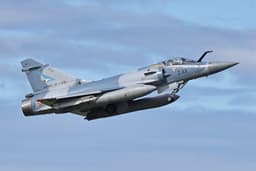
The Mirage 2000 is a French multirole, single-engine fourth-generation jet fighter manufactured by Dassault Aviation. Introduced in 1984, it was designed as a lightweight fighter with a focus on simplicity, reliability, and versatility, drawing from the success of its predecessors in the Mirage series. The Mirage 2000 has been employed by several air forces around the world and has proven itself in various international conflicts.

Production History: Development of the Mirage 2000 started in the late 1970s as a project to create a versatile platform that could meet operational requirements without the complexity and cost of some contemporary fighters. The aircraft entered operational service in 1984 with the French Air Force, and over its production lifespan, more than 600 units were built across several variants, including air superiority, ground-attack, and reconnaissance models.

Design Features: The Mirage 2000 features a delta wing design, which contributes to its high maneuverability and allows for a wide range of airspeeds and altitudes. Powered by a single SNECMA M53 turbofan engine, it can achieve supersonic speeds without afterburners. The fighter is equipped with advanced avionics, including radar, electronic warfare systems, and a comprehensive weapons suite.

Operational History: The Mirage 2000 has seen combat in numerous conflicts, including the Gulf War, the Kosovo War, and operations in Afghanistan and Libya. Its performance in air-to-air combat and precision ground-attack missions has validated its design philosophy, emphasizing ease of maintenance, operational flexibility, and combat effectiveness.

Comparison with Similar Models

Mirage 2000 vs. F-16 Fighting Falcon

Agility and Engine Power: Both aircraft are praised for their agility in the air, with the Mirage 2000's delta wing offering excellent maneuverability at high speeds. The F-16 has a slight edge in engine thrust-to-weight ratio, providing rapid acceleration and climb rates.

Avionics and Weapon Systems: The F-16 has seen numerous updates to its avionics and weapon systems, keeping it competitive with newer aircraft models. The Mirage 2000 has also been upgraded over time, particularly in its radar and missile capabilities, maintaining its effectiveness in modern combat scenarios.

Mirage 2000 vs. MiG-29

Design Philosophy: The Mirage 2000 and the MiG-29 were developed around the same time, with each aircraft reflecting a different design philosophy. The Mirage 2000 focuses on simplicity and versatility, while the MiG-29 is designed for superior air superiority with its robust airframe and powerful engines.

Operational Flexibility: While the MiG-29 excels in air combat with its high maneuverability and powerful radar, the Mirage 2000 offers greater versatility with its multirole capabilities, allowing for effective air-to-air and air-to-ground operations.

Share:
Values shown may not be 100% accurate, as some metrics are averages or only represent certain production years and configurations. Engine specs are based on the best options available.

Related Fighter Jet Comparisons

Frequently Asked Questions

Learn more about the WebFlite Aircraft Comparison Tool.

What is this comparison tool?

WebFlite’s Aircraft Comparison Tool allows users to contrast the specifications of over 100 airliner, freighter, and fighter jet models. The head-to-head comparisons include data related to size, weight, capacity, performance, and much more! Whether you want to compare similar aircraft, old vs new, big vs small - you can find it here at WebFlite!

How do you use this tool?

The Aircraft Comparison Tool is extremely easy to use! First, select your type of aircraft - Airliners, Freighters, or Fighter Jets. When the page reloads, select an aircraft from each of the two drop-down menus below the aircraft illustrations, and then click the blue “Compare” button. The page will automatically update and display those two aircraft and their specs! You can start a new comparison by changing either one or both aircraft from the drop-downs, and clicking “Compare” again. You can also change the aircraft type at the top of the page.

Where does the aircraft data come from?

The data for these aircraft has been scraped from a few sources, including manufacturer websites, government databases, and Wikipedia. While the data is fairly accurate, we cannot guarantee it all to be 100% exact. This is mainly due to discrepancies between sub-models and configurations. Most aircraft in this comparison tool will include what variant its data is based off of.

What are the most popular aircraft comparisons?
Can I share this tool or a comparison?

Yes! Please feel free to share this tool or any specific aircraft comparison with friends, family, or on social media! You may also share on your own website, but please include a link to the tool! We appreciate any support with helping us grow!

webflite-logoWebFlite
2023 WebFlite. All rights reserved.